Steps to Design a Website Funnel That Converts
Steps to Design a Website Funnel That Converts
Introduction
A website funnel guides visitors through a journey that leads to a conversion. It’s like a roadmap that directs potential customers from the moment they land on your site until they make a purchase or complete a desired action. Designing an effective website funnel is crucial because it helps maximise the conversion rate and ensures you get the most out of your traffic.
Understanding the importance of a website funnel is the first step. Without a properly designed funnel, visitors might get lost or leave your site without taking any action. A well-structured funnel captures interest, nurtures leads, and encourages them to convert. It's more than just a layout; it involves psychological triggers and marketing elements that guide the user's decision-making process.
The process of creating a website funnel involves several stages. From identifying your target audience to crafting compelling content, each step plays a vital role. Moreover, ongoing testing and optimisation are key to maintaining a high conversion rate. By refining your funnel based on performance data, you can continually improve and achieve better results. In this guide, we will explore how to design a website funnel that really converts.
Understanding the Importance of a Website Funnel
A website funnel is essential for guiding visitors toward a specific goal, like making a purchase or signing up for a newsletter. Without a well-structured funnel, potential customers might leave your site without taking any meaningful action. This translates to lost opportunities and wasted marketing efforts.
The primary purpose of a website funnel is to capture visitors' interest, nurture their curiosity, and lead them to a conversion. It involves understanding the user journey and creating a seamless path that meets their needs at each stage. From the moment visitors land on your site, the funnel should work to build trust and provide value, encouraging them to move forward step by step.
A website funnel also helps in segmenting your audience. By analysing how visitors interact with different stages of the funnel, you can better understand their behaviour and preferences. This information is valuable for personalising your marketing strategies and improving the user experience, ultimately increasing your conversion rate.
Key Elements of a High-Converting Website Funnel
A high-converting website funnel consists of several key elements that work together to guide visitors towards a conversion. Here are the main components:
User-Friendly Landing Page: The landing page is the first impression visitors get of your site. It should be visually appealing, load quickly, and clearly communicate the value proposition. Use a compelling headline, engaging visuals, and a strong call-to-action.
Engaging Content: Quality content is crucial for keeping visitors interested. Provide valuable information that addresses their needs and answers their questions. Use a mix of text, images, and videos to make the content more engaging.
Clear Call-to-Action (CTA): A well-placed and clear CTA prompts visitors to take the next step. Whether it's "Sign Up Now" or "Get Your Free Trial," make sure the CTA stands out and is easy to understand.
Nurturing Email Follow-Ups: Collecting email addresses allows you to follow up with visitors who didn't convert on their first visit. Send targeted and personalised emails that offer additional value and gently nudge them towards conversion.
Trust-Building Elements: Use testimonials, reviews, and social proof to build credibility and trust with your audience. Highlighting endorsements and successful case studies can reassure visitors that they are making the right choice.
Analytics and Tracking: Integrate analytics tools to monitor visitor behaviour and track key metrics. This helps you understand what's working and what needs improvement, allowing you to make data-driven decisions for optimising the funnel.
By focusing on these essential elements, you can create a website funnel that effectively converts visitors into customers. Each component plays a vital role in guiding the user through their journey and making the conversion process as smooth as possible.
Steps to Design Your Website Funnel
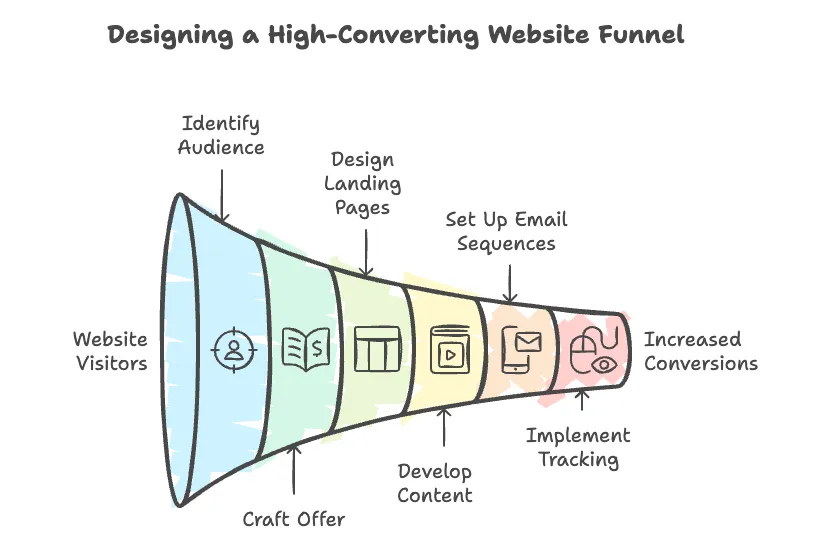
Designing a website funnel involves several important steps. Here's how to get started:
Identify Your Audience: Know who you're targeting. Understand their needs, preferences, and behaviours. This helps in creating content and offers that resonate with them.
Craft Your Offer: Determine what you will offer at each stage of the funnel. Whether it's an eBook, a free trial, or a special discount, make sure it provides value and encourages the visitor to take the next step.
Design Your Landing Pages: Create landing pages that are visually appealing and easy to navigate. Ensure each page matches the message of your ads and has a clear call-to-action (CTA).
Develop Engaging Content: Provide valuable and relevant content at each stage of the funnel. This could be blog posts, videos, or infographics that address the visitors' questions and lead them toward a decision.
Set Up Email Sequences: Use email marketing to nurture leads who aren’t ready to convert immediately. Create automated email sequences that offer additional value and guide them through the funnel.
Implement Tracking and Analytics: Use tools like Google Analytics to track user behaviour and measure the effectiveness of your funnel. Monitor key metrics such as conversion rates, bounce rates, and average session duration.
Test and Refine: Continuously test different elements of your funnel, like headlines, CTAs, and content formats. Use A/B testing to find what works best and make data-driven adjustments.
Following these steps can help you design a website funnel that guides visitors smoothly toward conversion.

Testing and Optimising Your Website Funnel for Better Conversions
Once your funnel is live, it's crucial to test and optimise it for better performance. Here are some steps to follow:
A/B Testing: Regularly conduct A/B tests on various elements of your funnel, such as headlines, images, CTAs, and page layouts. This helps you identify what resonates best with your audience.
Analyse Metrics: Use analytics tools to monitor key metrics like conversion rates, click-through rates, and bounce rates. Identify any drop-off points where visitors are leaving the funnel and make necessary adjustments.
Gather Feedback: Collect feedback from users to understand their experience and identify pain points. Use surveys or direct interactions to get insights into what needs improvement.
Optimise Loading Speeds: Ensure that all pages in your funnel load quickly. Slow loading times can frustrate visitors and lead to higher bounce rates. Use tools like Google PageSpeed Insights to test and improve your page speeds.
Improve Mobile Experience: Optimise your funnel for mobile users. Make sure all pages are mobile-friendly and provide a seamless experience regardless of the device being used.
Refine Content: Continuously update and refine your content to keep it relevant and engaging. Add new insights, remove outdated information, and keep your messaging aligned with your audience's needs.
Testing and optimisation are ongoing processes. Regularly review your funnel's performance and make adjustments based on data and user feedback to ensure it remains effective.
Conclusion
Designing a website funnel that converts well involves careful planning, execution, and continuous improvement. Each step, from understanding your audience to refining content, plays a crucial role in guiding visitors towards conversion. Remember, a successful funnel is not a one-time effort—it requires constant testing and optimisation to adapt to changing user behaviours and preferences.
By focusing on the key elements and regularly evaluating your funnel's performance, you can create a more effective user journey that maximises conversions. At Pancake Pixels, we specialise in crafting tailored website funnel solutions that drive results. Ready to take your website conversions to the next level? Contact Pancake Pixels today to see how we can help you design a high-converting website funnel.
